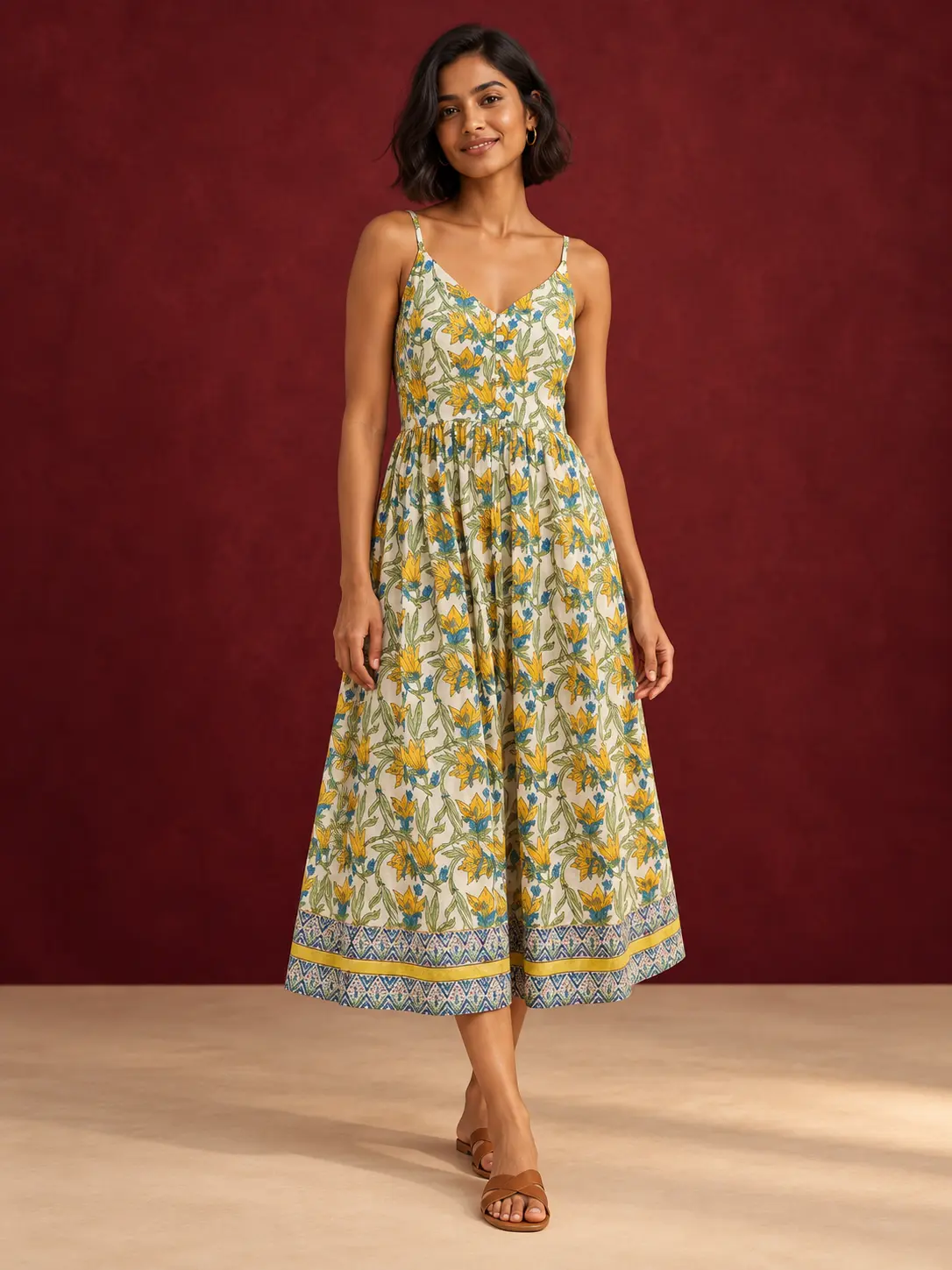
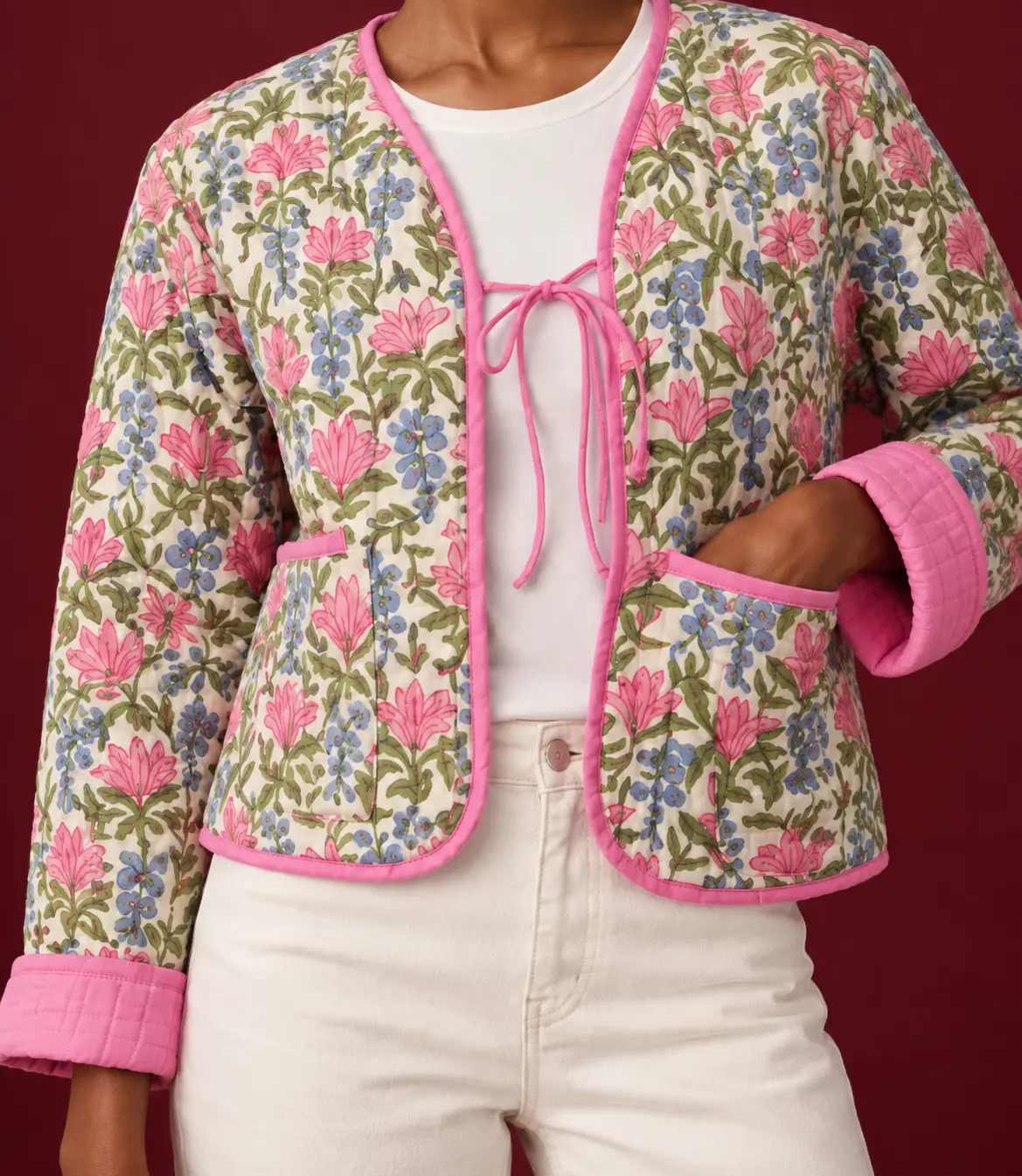
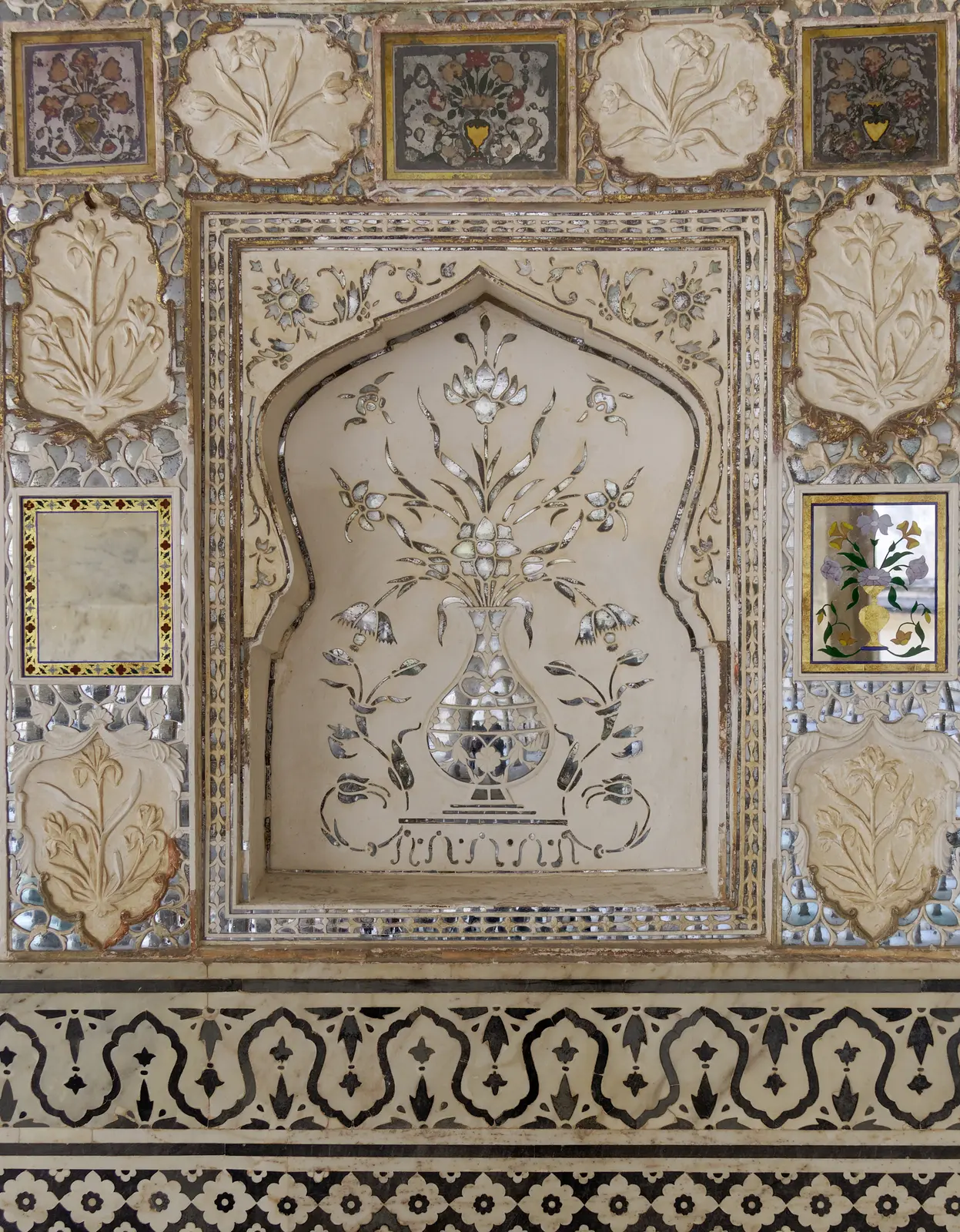
One block at a time
The skill behind a printed cloth
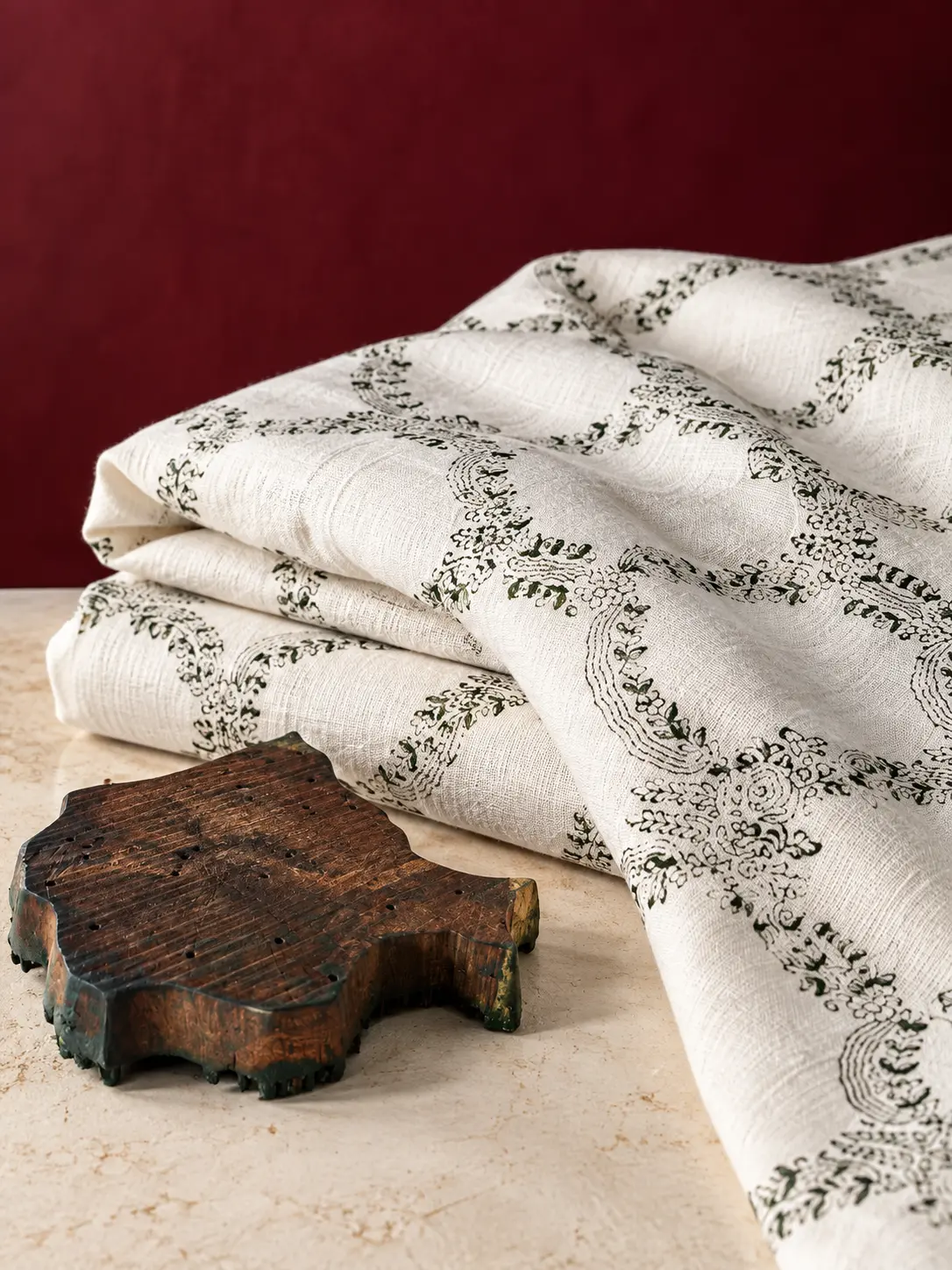
Before a pattern becomes a dress, there is a block, a prepared cloth and a very practised hand.
A pattern begins before the first impression
Hand-block printing is often described through the rhythm of stamping. But the work begins with the block itself. The V&A describes block carving as a specialist craft involving people skilled in different parts of the process, and documents block makers at work in Jaipur. The printed surface is the result of several kinds of knowledge coming together.
Building colour in layers
For a multi-coloured design, separate blocks carry different parts of the pattern. The cloth is prepared and held flat; the printer takes colour from a tray and positions each impression to build the repeat. JaipurBlocHouse describes the precision needed to overlay these colours. Looking closely at a print is a way of noticing this work: follow a stem, then find where it joins the next impression.
A history that is still being made
The Anokhi Museum’s Sanganer exhibition traces the town’s textile story from the seventeenth century, through changing markets and production methods. Its account includes cloth made for different lives and occasions, rather than a single unchanging tradition. A craft can have deep roots and still respond to new colours, uses and customers.
Look slowly
Next time a print catches your eye, start with its smallest repeated element. Is the flower mirrored or turned? Where does the border begin? Which colour gives the design its outline? These are useful ways to see the decisions inside a pattern. Slight variation alone is not proof of a production method: ask about the maker and process if that matters to your purchase. Appreciation starts with attention, and good questions make it more informed.
Sources & further reading
Our editorial interpretation draws on these sources. Venue details may change; check directly before travelling.